Tag: Spiritual Travel

  • Anjaneya Temple Azhiyanilai: Hanuman’s Divine Presence in Tamil Nadu

    Anjaneya Temple Azhiyanilai: Hanuman’s Divine Presence in Tamil Nadu

    Anjaneya Temple, Azhiyanilai: Where Hanuman’s Spirit Resides in Tamil Nadu

    Journey with us to the heart of Tamil Nadu, to a place where devotion burns as brightly as the sun. Nestled near the scenic routes of Pudukkottai, the Anjaneya Temple at Azhiyanilai stands as a profound testament to the enduring power of Lord Hanuman. This is more than just a collection of stones and carvings; it is a living nexus of faith, a sanctuary where the echoes of Hanuman’s strength and selfless devotion resonate through the landscape.

    Key Takeaway: This temple embodies the spiritual principle that unwavering devotion to Hanuman liberates the soul from life’s myriad sufferings, offering devotees an unparalleled sense of peace and strength.

    As travelers and seekers of heritage, we often look for places where the divine narrative is etched into the very earth. Azhiyanilai, situated in the heart of the Pudukkottai district, offers exactly this—a sacred space dedicated to the embodiment of strength, wisdom, and unwavering courage. The atmosphere here is thick with the scent of sacred incense and the palpable energy of centuries of worship, inviting every visitor to pause, reflect, and connect with the divine presence of Anjaneya.

    The Sacred Geography of Azhiyanilai

    The location of the Anjaneya Temple, Azhiyanilai, places it within the rich cultural blend of Tamil Nadu. While situated near the Pudukkottai-Arantangi road, the temple acts as a vital spiritual anchor for the local community, drawing pilgrims from across the region who seek solace and blessings from the Vanara incarnation.

    A Hub of Local Devotion

    The history of this site is interwoven with the fabric of the local community. It is a place where daily rituals blend smooth with grand spiritual narratives. The proximity to the natural landscape enhances the contemplative atmosphere, making the journey to the temple an experience in itself.

    Did You Know? A distance of approximately 29 km separates Azhiyanilai from the main hub of Pudukkottai, highlighting the temple’s specific, localized importance within the broader regional context.

    The Divine Presence: Anjaneya, The Embodiment of Strength

    At the core of this sacred space is the worship of Lord Hanuman, or Anjaneya. Hanuman is revered not merely as a deity but as the ultimate symbol of physical and moral fortitude. His presence here is felt in every corner, inspiring devotees to face their own challenges with courage and unwavering resolve.

    The Form of Vishvarupa Anjaneyar

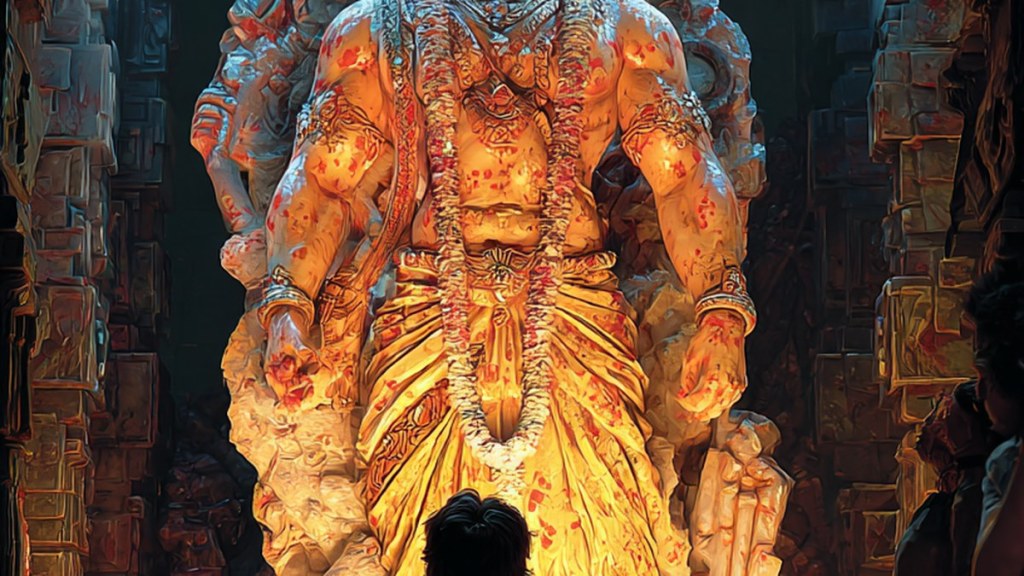
    The presiding deity of the temple is revered as Anjaneya, who is also known by the magnificent title, Vishvarupa Anjaneyar. This title speaks to his cosmic form, representing the universal manifestation of divine energy and boundless power. The statue of the presiding deity, standing at a majestic 12 ft height, is a focal point of immense reverence.

    “The presence of Anjaneya in Azhiyanilai is a tangible reminder that true strength lies not just in physical might, but in the moral fortitude to overcome adversity.”

    Architectural Harmony and Symbolism

    The architectural design of the temple reflects the spiritual philosophy it embodies. Unusually, the statue of the presiding deity is situated without a ceiling, an architectural choice that emphasizes the deity’s connection to the vast, open expanse of the heavens. The deity is oriented towards the east, symbolizing the rising sun of knowledge and new beginnings, perfectly aligning the temple with the dawn of spiritual enlightenment.

    Legends Woven in Stone: The Stories of Devotion

    The narratives surrounding Lord Hanuman are rich and profound, offering devotees endless inspiration. The legends associated with this temple speak to the transformative power of Hanuman’s actions—his dedication, his humility, and his unparalleled service to his devotees.

    Liberation from Suffering

    The core belief held by those who worship Anjaneya is that through devotion to him, all worldly sufferings are dissolved. Devotees believe that by invoking Hanuman’s energy, they gain the strength to navigate life’s inevitable hardships. This spiritual understanding transforms the temple from a mere structure into a powerful conduit for spiritual liberation.

    Visitor Tip: Spend time near the temple’s dhyana mandapa. This quiet space is designed for contemplation, offering a rare opportunity to connect with the stillness amidst the surrounding spiritual energy.

    Rhythms of Worship: Festivals and Rituals

    Festivals are the vibrant threads that weave the spiritual life of the temple. The rituals observed at Azhiyanilai are deeply rooted in tradition, providing a structured yet deeply personal experience for the devotees.

    The Significance of Saturday Pujas

    A particularly significant ritual observed at the Anjaneya Temple is the special pujas conducted every Saturday. These weekly observances are dedicated to honoring Lord Hanuman, reaffirming the bond between the deity and his worshippers. The atmosphere during these pujas is electric, filled with devotional songs and heartfelt prayers, marking a time for collective spiritual rejuvenation.

    The Ritual of Garlands

    A customary act of veneration involves adorning the deity with fresh Tulsi garlands. The fragrance of the Tulsi, a sacred plant in Hinduism, mingles with the temple air, creating an olfactory experience that is both soothing and spiritually uplifting. This simple act is a profound expression of love and respect offered by the devotees.

    A Practical Guide for Pilgrims

    For those planning a visit to this spiritually charged location, understanding the practicalities ensures a more enriching experience. We guide you on how to approach this sacred space with respect and mindfulness.

    Getting There and Temple Access

    Reaching Azhiyanilai requires planning, but the journey is part of the pilgrimage. Travelers should be prepared for the tranquil yet rural environment of the Pudukkottai district. Respect local customs and engage with the local community to deepen your connection to the place.

    • Best Time to Visit: The cooler months offer the most pleasant experience for exploration and contemplation.
    • Rituals: If you plan to observe the Saturday pujas, arrive early to participate in the communal devotion.
    • Attire: Dress modestly, reflecting the reverence due to a sacred Hindu site.

    Visitor Tip: Engage with the local priests and community members. Their knowledge of the temple’s ongoing rituals and local lore will provide you with an irreplaceable layer of understanding.

    Conclusion: Carrying the Strength of Hanuman Home

    The Anjaneya Temple at Azhiyanilai is a living monument to the enduring power of faith. It reminds us that amidst the complexities of modern life, the timeless virtues of courage, devotion, and selflessness remain the most potent forces. As you leave this sacred space, carry with you the strength of Lord Hanuman—the unwavering resolve to face your own battles with grace and courage. May the blessings of Anjaneya illuminate your path, just as they illuminate the walls of this ancient sanctuary.

    We invite you to explore related spiritual journeys. Read More about Hanuman Legends or discover Explore Other Temples in Tamil Nadu to continue your heritage exploration.
  • Arahanthgiri Jain Math: Ancient Secrets of Tirumalai Heritage

    Arahanthgiri Jain Math: Ancient Secrets of Tirumalai Heritage

    Arahanthgiri Jain Math: Echoes of the Last Saints near Tirumalai

    Journey with us to the heart of ancient spiritual geography, where the whispers of the past meet the enduring silence of the hills. The Arahanthgiri Jain Math, nestled near the sacred Tirumalai complex, is not merely a collection of stones and idols; it is a living repository of over two millennia of Jain philosophy, meditation, and profound spiritual lineage. This site, known historically as Arhatsugiri or Arihantgiri, reflects the deep connection between ascetic tradition and the natural landscape of South India.

    Key Takeaway: This Jain Math represents a continuous spiritual stream dating back to the period of the last ‘Shrutkevali’ Bhadrabahu, linking the physical geography of Tirumalai with the ultimate pursuit of spiritual knowledge, known as Swadhyaya.

    As we explore the history and architecture of this remarkable site, we uncover a narrative woven from asceticism, devotion, and unparalleled historical depth. For the traveler seeking more than just a destination, this exploration offers a window into the very soul of ancient Indian spiritual thought.

    The Ancient Roots: Unearthing the History

    The story of Arahanthgiri Jain Math stretches back far beyond recorded history, grounding itself in the profound ascetic traditions of the ancient world. Its origins are intrinsically linked to the period spanning from 322 to 185 BCE, an era defined by the presence of enlightened masters and dedicated seekers.

    The Legacy of the Shrutkevali

    The historical foundation of this spiritual center is inextricably linked to the presence of the Last ‘Shrutkevali’, Bhadrabahu. Legend holds that it was during this time that Bhadrabahu and thousands of other saints practiced deep meditation and the pursuit of ‘Swadhyaya’ (self-study and scriptural understanding) in this very locale. This established Thirumalai not just as a place of residence, but as a sacred center for spiritual awakening.

    “The history of Arahanthgiri is a living chronicle of the pursuit of knowledge, demonstrating how physical space can become sanctified by dedicated spiritual practice.”

    A blend of Ascetics

    The area known today as the Village Thirumalai, which houses this Jain Math, is historically recognized under the names Arhatsugiri or Arihantgiri. This nomenclature immediately signals its status as a place where enlightened beings resided and taught. It was a sanctuary for not just Jain monks but a broader community of seekers dedicated to self-realization.

    Did You Know?

    The designation ‘Arhatsugiri’ literally translates to the abode of the Arhats—those who have attained liberation. This name speaks volumes about the spiritual elevation achieved at this location.

    Enduring Stewardship

    For centuries, this complex served as a vital hub for spiritual learning. Today, the stewardship of this invaluable heritage is overseen by the Archaeological Survey of India (ASI), ensuring that the integrity of this ancient site is preserved for future generations. This careful management allows the spiritual narrative to continue unfolding.

    Architectural Marvels: The Sacred Landscape

    The physical structure of the Arahanthgiri Jain Math is a profound reflection of its spiritual significance. It is a landscape where human endeavor meets divine aspiration, characterized by layered structures and serene settings that invite contemplation.

    The Ascent to Enlightenment

    The most striking architectural feature of the Math is the ascent to the sacred shrine. Dominating the landscape is a hill upon which the principal deity resides, accessed by a formidable staircase. This ascent is symbolic; it mirrors the spiritual journey from the mundane world to the realm of enlightenment.

    This climb involves 140 steps, a physical metaphor for the arduous yet rewarding path of spiritual discipline. Each step echoes the dedication of those who walked this path long ago.

    The Central Iconography: Neminath Idol

    At the apex of this ascent rests the 16-meter Neminath Idol. This colossal statue is the focal point of the entire complex, radiating an aura of serene majesty. Believed to date back to the 12th century, the idol of Neminath is revered not just as a deity but as an embodiment of the spiritual wisdom accumulated over the ages. It is a focal point for countless devotional acts.

    Visitor Tip: When visiting, take time to observe the carvings and the surrounding caves. These hidden spaces often hold intricate iconography and manuscripts that tell deeper stories about the Jain tradition.

    Hidden Sanctums and Lore

    Beyond the main shrine, the Jain Math complex is rich with smaller caves and chambers. These spaces are not just architectural features; they are repositories of history, containing hundreds of religious books and artifacts. Exploring these hidden sanctums offers a tangible connection to the scholarly and meditative life that once flourished here.

    The Spiritual Ecosystem: Deities and Legends

    The spiritual depth of Arahanthgiri is found in the rich blend of Jain legends and the veneration of its principal figures. The site is steeped in the lore of saints and the manifestation of divine wisdom across the ages.

    The Reverence for Neminath

    The central focus of worship is the idol of Neminath. In Jainism, Neminath is revered as a supreme Tirthankara, embodying the path to liberation. The presence of this massive idol anchors the entire spiritual geography of the Math, symbolizing the ultimate goal of spiritual liberation achievable through adherence to the path of non-violence and knowledge.

    “The Neminath Idol serves as a silent, colossal reminder that the journey toward enlightenment is long, arduous, and ultimately, profoundly rewarding.”

    The Influence of the Saints

    The history connects this site to the lineage of the ‘Shrutkevali’ and the 8000 other saints who practiced ‘Swadhyaya’. This historical context imbues the location with an atmosphere of deep, unbroken spiritual energy. It is a place where the philosophy of meditation was not just practiced, but lived.

    Festivals and Observances

    Jain Mathas are vibrant centers of community life, and the Arahanthgiri complex is alive with annual festivals that celebrate the spiritual milestones and the history of the community. These festivals are not merely rituals; they are communal celebrations of faith and heritage.

    Celebrating Spiritual Milestones

    While specific annual festival details vary based on local tradition, the Math observes several significant Jain festivals. These celebrations bring the community together, reinforcing the bonds forged over centuries. These events provide an opportunity for visitors to experience the living, breathing spirituality of the region.

    2000+ Years

    The sheer longevity of the tradition practiced here underscores the resilience of Jain philosophy across historical epochs.

    A Traveler’s Guide to Visiting

    For those planning a visit to this sacred and historically rich location, practical preparation ensures a respectful and enriching experience. Understanding the local customs and logistics is key to honoring the sanctity of the place.

    Getting There and Practicalities

    Reaching the Arahanthgiri Jain Math requires navigating to the vicinity of Tirumalai, which forms the core of the wider Jain complex. Travel logistics should be planned with respect for the local environment and customs.

    It is advisable to consult with local authorities or spiritual guides before arranging any specific pilgrimage. Respect for the monastic life and the sanctity of the ancient structures must guide every interaction.

    What to Expect on Site

    • Quiet Contemplation: Expect an atmosphere of deep stillness. Avoid loud activities to honor the meditative nature of the site.
    • Respectful Dress: Adhere to modest and traditional dress codes when entering the inner sanctums and exploring the historical caves.
    • Historical Immersion: Engage with the history by reading the inscriptions and observing the architecture; the stories are etched in the stone.
    • Cultural Exchange: If permitted, engage respectfully with the local custodians, who are the living link to this ancient heritage.

    Conclusion: A Legacy Enduring Through Time

    The Arahanthgiri Jain Math is more than a geographical location; it is a profound spiritual anchor point. From the ancient practices of the Shrutkevali to the magnificent Neminath Idol standing watch over the hills, this site embodies the enduring quest for truth and liberation. As travelers explore the rich blend of India, sites like this remind us that the deepest heritage lies not just in monuments, but in the timeless pursuit of inner peace and wisdom.

    We invite you to reflect on the journey—a journey that spans two thousand years, connecting the physical world with the eternal spiritual path. Explore the legacy of the Jain tradition and feel the profound silence of history in the heart of Tirumalai.

    For further exploration of Jain heritage, we recommend reading about the broader context of the region: Tirumalai (Jain complex). Discover related insights on Jain philosophy by reading about Laxmisena.