
Anekadhangavadeswarar Temple: Kanchipuram’s Ancient Shiva Sanctuary
Nestled in the historic heartland of Tamil Nadu, the Anekadhangavadeswarar Temple stands as a silent testament to the enduring spiritual legacy of South India. Located in Kanchipuram, this sacred site is not merely a collection of stone and mortar; it is a living chronicle of Tamil Saivism, revered as one of the venerable Paadal Petra Sthalam. Dating back to the 7th century, this temple complex connects the present day directly to an era when devotional poetry shaped the very fabric of religious tradition.
The journey to Anekadhangavadeswarar is a journey through time. It sits in close proximity to the magnificent Kailasanathar Temple, marking Kanchipuram as a nexus where artistic genius and spiritual devotion have converged for over a millennium. As we explore its architecture, legends, and vibrant festivals, we uncover a narrative woven from the threads of Shiva worship, divine lineage, and profound philosophical concepts.
The Historical Roots: A Legacy Forged in the 7th Century
The foundation of Anekadhangavadeswarar’s spiritual importance is deeply rooted in the 7th century Tamil Saiva canonical works, particularly the Tevaram. This period witnessed a golden age for Tamil devotional literature, and this temple is enshrined within the canon of the 275 temples revered in the canon, solidifying its status as a Paadal Petra Sthalam.
Reverence in the Canon
Its inclusion in the sacred canon underscores its historical and religious weight. It is not just a local shrine but a recognized landmark within the broader theological landscape of Tamil Shaivism. This classification speaks volumes about the temple’s historical continuity and its role in preserving ancient religious knowledge.
Endowment and Administration
The stewardship of this ancient heritage is managed by the Hindu Religious and Endowment Board of the Government of Tamil Nadu. This administrative structure ensures that the temple’s historical sanctity and architectural integrity are preserved for future generations.
Mythology and Divine Lineage: The Legends of Anegabeswarar
The stories surrounding Anekadhangavadeswarar are rich with divine intervention and epic mythology. The legends paint a picture of cosmic order established through divine action, linking the temple directly to the foundational narratives of Shiva worship.
The Birth of the Lingam
According to legend, the divine Vinayaka, the son of Shiva, established Anegabeswarar in the iconic form of a Lingam, the quintessential representation of Shiva’s cosmic energy. This act signifies the establishment of Shiva’s presence in this sacred space.
The Warrior and the King
The narrative further involves a pivotal event where Anegabeswarar is believed to have vanquished the demon Iraniyapura king Kesi. This act of divine warfare established order, and it is linked to the auspicious union of his daughter, Vallabai, with Vinayaga. Furthermore, the worship extended to Kubera, the king of wealth, underscoring the temple’s connection to prosperity and cosmic dominion.
\”Anegabeswarar represents the divine power that establishes order, linking earthly kingship with cosmic spiritual reality.\”
Etymological Echoes
The very name holds subtle linguistic clues. The term Anekapa is believed to be derived from the elephant, referencing the way it drinks water with its trunk and mouth. This subtle link connects the temple to the natural world and the wisdom inherent in the natural forms.
Architectural Marvels: Granite and Devotion
The physical structure of the Anekadhangavadeswarar temple complex is a masterclass in Dravidian temple design, characterized by its use of durable granite and a harmonious, yet spiritually focused, layout. It reflects the aesthetic sensibilities of the 7th-century builders while incorporating later devotional accretions.
The Layout and Orientation
The temple complex features a singular prakarams (outer courtyard), providing a contained space for devotees. The structure is oriented towards the North, featuring a modest raja gopuram (gateway tower). This simple, yet profound, layout directs the visitor’s focus inward toward the sanctum.
Sanctum and Iconography
The central shrine is the focal point, housing the image of Anekadhangavadeswarar in the form of a magnificent granite lingam. The use of granite speaks to the temple’s permanence and the enduring nature of the divine presence. Unlike some other temples, there is no separate shrine for Parvathi; it is believed that Kamakshi of Kanchipuram serves as the common mother deity for all Shiva temples in the region.
Surrounding Precincts
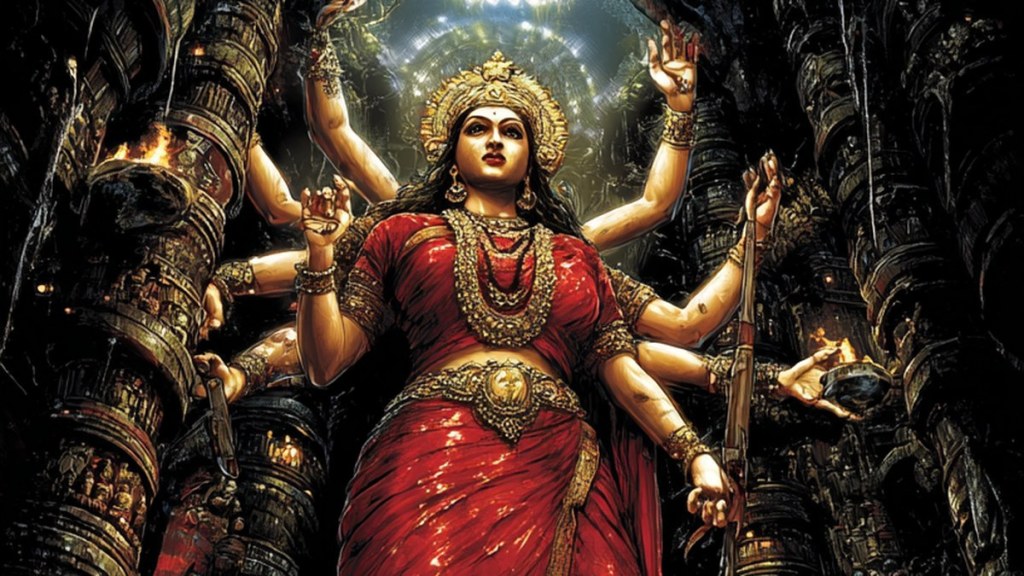
The walls surrounding the sanctum are constructed of solid granite, lending the complex an aura of solemnity and strength. These walls are adorned with symbolic imagery, including representations of Dakshinamurthy (Shiva as the Teacher), Durga (the warrior goddess), and Chandikeswarar (a revered saint and devotee of Shiva), weaving a blend of divine relationships around the central deity.
Festivals and Spiritual Rhythms
The life of the temple is punctuated by vibrant annual festivals that draw devotees from across the land. These celebrations are moments where the historical, mythological, and architectural elements come alive through communal worship and ritual.
Major Celebrations
- Thirukarthikai: Celebrated during the months of November to December, marking a significant period of auspiciousness.
- Mahashivarathri: The most prominent festival, observed during February and March, celebrating the divine manifestation of Shiva.
These yearly observances provide a tangible link between the temple’s ancient rituals and the living, breathing faith of the contemporary community. The atmosphere during these festivals is electric, filled with the sound of hymns and the warmth of shared devotion.
A Pilgrim’s Guide: Visiting Anekadhangavadeswarar
For those planning a visit to this remarkable site, understanding the practicalities ensures a more meaningful and respectful experience. Kanchipuram is a city rich in heritage, and visiting this temple offers an immersion into Tamil spiritual history.
Getting There and Logistics
The temple is situated in the historic region of Kanchipuram. Travelers should plan their visit allowing ample time to explore the surrounding heritage sites, such as the nearby Kailasanathar Temple. The atmosphere is deeply spiritual, so visitors are encouraged to approach the site with quiet reverence.
Rituals and Etiquette
Daily rituals occur at specific times, offering structured opportunities for personal reflection. Observing local customs regarding temple entry and interaction ensures that visitors honor the sanctity of this sacred space.
Conclusion: Enduring Echoes of the Divine
The Anekadhangavadeswarar Temple in Kanchipuram is more than just a historical monument; it is an enduring echo of the 7th-century Tamil spiritual awakening. From the foundational legends of Vinayaka and Shiva to the immutable beauty of its granite architecture, this site invites reflection on themes of cosmic order, divine lineage, and the timeless pursuit of spiritual truth.
As travelers seek the depth of India’s heritage, places like this offer more than just sights; they offer a direct connection to the soul of the land. The stories etched in the stone of Kanchipuram continue to resonate, reminding us that the pursuit of divinity is a journey that spans millennia.
Further exploration of Tamil religious art can be found in our guide on Kailasanathar Temple.




 10000 Temples of India