Tag: Indian Temples

  • Anantasaayi Vishnu Temple: Discover Black Chlorite Art in Sambalpur

    Anantasaayi Vishnu Temple: Discover Black Chlorite Art in Sambalpur

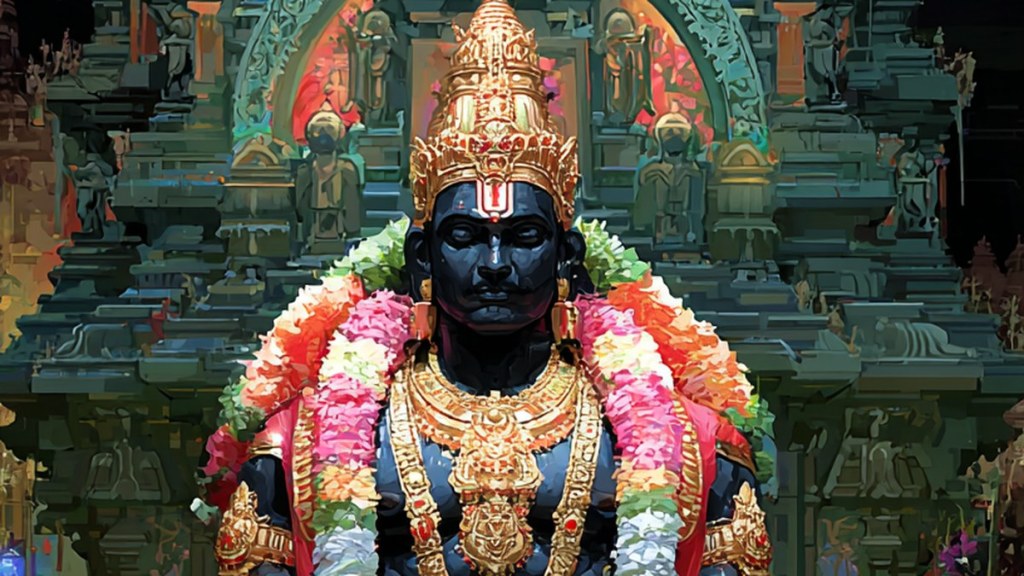
    Journey with us to the heart of Odisha, to a place where the echoes of the Chauhan dynasty meet the profound stillness of divine artistry. The Anantasaayi Vishnu Temple, nestled near Sambalpur, is not merely a structure of stone and mortar; it is a living testament to centuries of devotion, a sanctuary housing one of the most striking representations of Lord Vishnu in India—the enigmatic black chlorite image of resting Vishnu.

    For the discerning traveler and heritage seeker, this site offers an unparalleled opportunity to step outside the rush of modernity and immerse oneself in a spiritual landscape steeped in history. As we explore this sacred space, we uncover stories woven into the very architecture, legends whispered by the stones, and festivals celebrated with vibrant fervor.

    Key Takeaway: The defining feature of this temple is the unique, ancient black chlorite image of Vishnu, which serves as a profound focal point, bridging historical patronage with artistic mastery.

    \

    A blend Woven in Time: The Historical Roots

    To truly appreciate the Anantasaayi Vishnu Temple, one must first understand the era in which it was conceived. This temple is deeply rooted in the history of the Chauhan kings, a powerful lineage that shaped ancient North and East India. The foundation of this sacred site dates back to the early sixteenth century, an era marked by both martial strength and deep spiritual patronage.

    Patronage of the Chauhan Dynasty

    The temple was commissioned by the illustrious Chauhan king, Balaram Dev. This act of devotion was more than a simple construction project; it was an assertion of faith and a legacy etched in stone. The decision to build this temple speaks volumes about the religious and cultural landscape of the time, reflecting the deep reverence for Vishnu that permeated the region.

    Did You Know? The patronage of such grand religious structures often reflects the political stability and the spiritual aspirations of the ruling class. The temple stands as a tangible link between the royal lineage and the divine realm.

    The history surrounding the temple is rich with anecdotal lore. It is recounted that the vision for this sanctuary arose from a poignant moment involving the queen, whose dowry included an image of Narayana. It was this sacred artifact that inspired the king to erect this magnificent shrine in honour of the supreme deity.

    \”The temple is a physical manifestation of a royal promise—a dedication born from devotion and the desire to honour the divine presence within the realm of the living.\”

    Architectural Brilliance: The Rekha Deula Style

    The physical structure of the Anantasaayi Vishnu Temple embodies the regional architectural traditions while showcasing unique stylistic elements. The main sanctuary is masterfully executed in the Rekha Deula style, a hallmark of North Indian temple architecture, known for its graceful, curvilinear spire and commanding presence.

    The Geometry of Devotion

    The architecture is characterized by symmetry and elegant lines, creating an atmosphere of serene contemplation within the temple complex. The use of the Rekha Deula form elevates the structure, drawing the eye towards the central deity and symbolizing cosmic order.

    Visitor Tip: When exploring the temple, take time to observe the intricate carvings. Notice how the geometric precision of the architecture complements the flowing lines of the divine forms depicted in the iconography.

    Iconography Woven into Stone

    Beyond the main structure, the temple complex is a rich visual narrative. The walls are adorned with depictions of pivotal figures from the Hindu pantheon, illustrating the interconnectedness of divine forms. We find prominent representations of Ganesha, the remover of obstacles, and Garuda, the divine vehicle, alongside various glorious Avatars of Narayana. These elements are not merely decorative; they are theological statements rendered in stone.

    The Divine Presence: Lord Vishnu and the Chlorite Legacy

    The true soul of the Anantasaayi Vishnu Temple lies in its central focus: the representation of Lord Vishnu. What makes this temple uniquely captivating is the specific artistic medium used for the central image. It is famous throughout the region for the black chlorite image of resting Vishnu.

    The Enigma of Black Chlorite Art

    Chlorite, a naturally occurring mineral, lends a deep, profound, almost velvety black hue to the artwork. This material, used by the artisans of the sixteenth century, imbues the image with an aura of timeless mystery and deep spiritual gravity. The resting posture of Vishnu in this depiction evokes a state of perfect, eternal repose—a visual metaphor for cosmic peace and the ultimate reality of existence.

    Key Takeaway: The use of black chlorite is not accidental; it is a deliberate choice that transforms the depiction of Vishnu into an object of deep meditation, emphasizing stillness over dynamic action.

    Legends and Spiritual Resonance

    The presence of Vishnu, the preserver of the cosmos, is amplified by the temple’s specific legend. The story of the queen bringing the image in dowry connects the earthly realm of royalty with the celestial authority of the deity. This narrative transforms the artwork from a mere sculpture into a sacred heirloom.

    \”The resting form of Vishnu in chlorite is a silent invitation to pause, to reflect on the eternal nature of peace that underlies all creation.\”

    Rhythms of Devotion: Festivals and Celebrations

    Temples are not just places of worship; they are vibrant centers of community life, pulsating with the energy of religious festivals. The Anantasaayi Vishnu Temple serves as a focal point for celebrations dedicated to Lord Vishnu, ensuring that the spiritual life of the community is continually renewed.

    Ananta Chaturdashi: The Zenith of Celebration

    Among the numerous festivals celebrated here, the most significant occasion is undoubtedly Ananta Chaturdashi. This festival, celebrated when the divine form of Lord Ananta is invoked, falls during the auspicious month of Bhadrapada. During this time, the temple buzzes with vibrant rituals, devotional songs, and community gatherings, bringing the entire region into a state of collective spiritual ecstasy.

    100% of the temple’s major festivals are dedicated to the worship of Vishnu, underscoring its central importance in the local religious calendar.

    A Traveler’s Guide: Reaching the Sacred Site

    For those planning a pilgrimage or a cultural exploration, understanding the logistics of reaching this remarkable site is just as important as appreciating its beauty. Situated in the historic heart of the region, accessibility is straightforward, allowing visitors to transition smooth from the bustle of modern life to ancient serenity.

    Getting There and Local Context

    The temple is conveniently located within easy reach of major transportation links. It is situated approximately two kilometres from the Sambalpur railway station. This proximity makes it an accessible destination for travelers arriving by train or road.

    • Railway Access: Directly accessible from Sambalpur Railway Station.
    • Local Area: Located in the vicinity of Kamali Bazar, near Bada Bazar, placing it within the historical core of Sambalpur.
    • Travel Note: While the temple itself is a spiritual retreat, the surrounding area offers a rich blend of local history and culture.

    Visitor Tip: Allow ample time for reflection. The true experience of the Anantasaayi Vishnu Temple is found not just in viewing the architecture, but in sitting quietly, absorbing the silence, and allowing the ancient energy to settle within you.

    Conclusion: An Enduring Legacy

    The Anantasaayi Vishnu Temple in Sambalpur stands as a magnificent convergence of art, history, and spirituality. From the patronage of the Chauhan kings to the profound artistry of the black chlorite depiction, this site offers a powerful narrative of enduring faith. It invites us to look beyond the surface, to see the deep, resonant history embedded in every carved line and every sacred ritual.

    It is an invitation to slow down, to listen to the echoes of the past, and to connect with the timeless serenity embodied by Lord Vishnu. Travel to Sambalpur, and discover this hidden gem of Odisha heritage for yourself. Further explorations of related sites await you on our blog: Related Temple.

  • Arakeshvara Temple Hole Alur: 10th Century Shiva Heritage

    Arakeshvara Temple Hole Alur: 10th Century Shiva Heritage

    Journey with us to the heart of Karnataka, where history is not merely recorded but carved in stone. The Arakeshvara Temple, nestled in the quiet village of Hole Alur, stands as a profound testament to the artistic and military prowess of the medieval era. Dedicated to the revered Hindu deity Shiva, this 10th-century structure whispers tales of royal ambition, epic battles, and the sophisticated architectural legacy of the Western Ganga Dynasty.

    As an essential monument protected by the Archaeological Survey of India, this temple is more than just a place of worship; it is a tangible link to a golden age of South Indian history. Standing amidst the verdant landscape of Karnataka, the Arakeshvara Temple invites visitors to contemplate the intersection of divine worship and earthly power.

    Key Takeaway: This temple is a unique confluence of religious devotion and historical narrative, embodying the power dynamics between regional dynasties during the 10th century.

    \

    Echoes of Empire: The Historical Context

    To fully appreciate the significance of the Arakeshvara Temple, one must step back to the turbulent political landscape of the 10th century. This era was defined by shifting alliances and fierce regional conflicts. The temple’s foundation is inextricably linked to a pivotal military event that cemented its place in historical memory.

    The Royal Commission and Victory

    The construction and patronage of this magnificent shrine are directly tied to the reign of King Butuga II of the Western Ganga Dynasty. According to historical accounts, the temple was commissioned around 949 A.D. To commemorate a significant military victory. This victory was achieved during a crucial engagement against the Cholas of Tanjore, specifically the battle of Takkolam.

    The stones of Hole Alur remember not only the worship of Shiva but also the echoes of ancient warfare and royal triumph.

    This victory was a strategic engagement between Crown Prince Rajaditya, son of the Chola King Parantaka I, and King Butuga II, a powerful vassal of the Rashtrakuta emperor Krishna III. The temple thus serves as a monument to the political and military alliances that shaped the geography and culture of present-day Karnataka.

    Did You Know? The temple’s existence is tied to the political maneuvering between the Ganga, Chola, and Rashtrakuta powers, illustrating the complex blend of medieval South Indian history.
    \

    Architectural Harmony: The Western Ganga Style

    The physical structure of the Arakeshvara Temple is a masterclass in understated elegance, characteristic of the architectural sensibilities of the Western Ganga period. Unlike some grander temples, this structure embodies simplicity, focusing attention on the spiritual core while adhering to established structural principles.

    The Temple Plan: A Study in Simplicity

    The temple adheres to a simple yet profound plan, typical of the regional constructions of the time. This design is highly functional, guiding the devotee through a sacred progression:

    • Garbhagriha: The innermost sanctum, housing the primary deity, represents the spiritual epicenter of the entire complex.
    • Sukhanasi: A vestibule connecting the sanctum to the main hall, acting as a transitional space.
    • Navaranga/Maha Mantapa: A large, sculptured hall that expands the sacred space, allowing for communal worship and contemplation.
    • Nandimantapa: An open, elevated, and detached hall facing east, specifically dedicated to the image of Nandi, the divine bull, Shiva’s devoted companion.

    Sculptural Details and Decoration

    The overall decoration of the temple is characterized by a beautiful restraint. The focus is placed on the structural lines and the symbolic placement of elements rather than excessive ornamentation. Within the volutes of the structure, one can observe the presence of dancing celestial maidens, the apsaras, whose presence adds a layer of ethereal beauty to the earthly structure.

    Visitor Tip: When visiting, take time to observe the interplay between the solid architectural forms and the delicate sculptural details. Notice how the simplicity enhances the spiritual depth.

    The Divine Presence: Shiva and the Temple

    At the center of this architectural narrative is the presence of Lord Shiva, the presiding deity of the Arakeshvara Temple. Shiva, the Destroyer and Transformer, is invoked here not just as a god, but as the embodiment of cosmic order and the force behind the historical events that shaped this land.

    The Significance of the Deity

    The choice of Shiva as the focus reflects the deep spiritual currents of the era. In the context of the 10th century, Shiva represented the cosmic force that governs both the physical world and the unfolding of royal destiny. The temple acts as a focal point where earthly political power merges with divine, eternal truth.

    A Living Tradition: Festivals and Rituals

    While specific, elaborate festival calendars may vary, temples like Arakeshvara in Hole Alur are living centers of local tradition. Festivals here are not just dates on a calendar; they are vibrant communal celebrations that weave the historical narrative into contemporary life.

    Celebrating the Sacred Cycle

    Festivals associated with Shiva temples often revolve around cycles of creation, destruction, and renewal. These celebrations provide an opportunity for the local community to reaffirm their connection to the divine and to honor the lineage of the temple’s patrons.

    10th Century Origin

    The temple’s origins firmly place it within the politically charged and culturally rich period of the 10th century.

    Festivals at Hole Alur are vibrant expressions of enduring faith, connecting the ancient past with the present community.

    A Guide for the Pilgrim: Visiting Hole Alur

    For those planning a pilgrimage or a historical exploration of this site, understanding the practicalities of visiting Hole Alur is just as important as appreciating its artistry. The journey itself is part of the experience, moving from the modern world into a space steeped in antiquity.

    Getting There and Essential Information

    Reaching this historic site requires navigating the landscapes of Karnataka. While the temple is situated in a rural setting, the historical significance draws visitors from across the region.

    If you are planning your visit, consider the following practical advice:

    • Best Time to Visit: The cooler months offer the most pleasant conditions for exploring the site and its surroundings.
    • Atmosphere: Expect a serene and contemplative atmosphere, perfect for reflection on history and spirituality.
    • Accessibility: As a rural heritage site, visitors should be prepared for a more immersive, slower-paced experience.
    Visitor Tip: Engage with the local community to gain deeper insights into the living traditions surrounding the temple, making your visit truly enriching.

    Conclusion: A Legacy Carved in Stone

    The Arakeshvara Temple at Hole Alur stands as a remarkable artifact—a physical manifestation of the confluence of art, power, and faith from the 10th century. From the strategic battle that inspired its creation to the harmonious architectural plan that guides the devotee, the temple narrates a compelling story of the Western Ganga influence and the enduring spirit of Shiva.

    \

    It remains a vital reminder that the greatest treasures of travel are those that connect us not just to distant lands, but to the deep, resonant history etched into the very stones of our world. We encourage you to explore this remarkable heritage and feel the timeless presence of the past.

    For further exploration into Karnataka’s rich heritage, we invite you to explore Western Ganga History or discover Chola Influence.

  • Alanduraiappar Temple: Sacred History and Architecture of Nallatthukkudi

    Alanduraiappar Temple: Sacred History and Architecture of Nallatthukkudi

    Journey with us to the heart of Tamil spiritual heritage, to a place where devotion echoes through the stones of history. We travel today to the Alanduraiappar Temple, nestled in the region of Nallatthukkudi, a sanctuary steeped in the lore of the Vaippu Sthalams sung by the revered Saivite Nayanar, Appar. This is more than just a collection of stones; it is a living chronicle of devotion, artistry, and enduring spiritual tradition that defines the soul of South India.

    Key Takeaway: The Alanduraiappar Temple stands as a remarkable testament to the syncretic nature of South Indian religious history, blending distinct regional names and architectural elements into one profound spiritual experience.

    For pilgrims and history enthusiasts alike, visiting this site offers an intimate glimpse into the devotional practices that have sustained this community for centuries. Whether you are drawn by the ancient stories, the intricate carvings, or the simple, profound act of worship, the atmosphere of this temple is one of deep, resonant peace. Prepare to step away from the modern rush and enter a realm where the past breathes through every archway.

    The Deep Roots of History

    To understand the gravity of the Alanduraiappar Temple, one must explore the layered history that surrounds it. This site is not defined by a single name but by the many appellations it has borne across the ages, reflecting the shifting cultural and historical perspectives of the region.

    Evolving Names and Historical Context

    The temple has witnessed a rich blend of nomenclature. In the past, it was known by names such as Nallakkudi, Kuyiladuthurai, and Kuyiladunthurai. Historians have sought to pin down its exact lineage, with figures like R. P. Sethu Pillai referring to it as Kuyiladuthurai and Kuyilalanthurai. Furthermore, U. V. Swaminatha Iyer linked it to the temple Karunguyilnathampettai, located north of Dharmapuram. These variations underscore the temple’s deep, interwoven connection with the broader history of the region.

    Did You Know?: The variations in the temple’s name reflect the evolving linguistic and historical narratives of the Tamil region, showing how different eras and scholars perceived this sacred landmark.

    A Milestone in Sacred History

    A significant event that marks a pivotal point in the temple’s history was the Kumbhabhishekham, a grand consecration ceremony, which was held on June 8, 1970. Such events are not mere rituals; they are communal celebrations that reinforce the temple’s status as a living center of faith and community identity. This event highlights the enduring commitment of devotees to maintain the sanctity and grandeur of their ancestral shrines.

    The history of Alanduraiappar is not just a record of dates and names, but a living narrative woven from the threads of devotion and cultural evolution.

    Architectural Harmony and Sacred Spaces

    The physical structure of the Alanduraiappar Temple speaks volumes about the architectural sensibilities of the era and the profound spiritual concepts embedded within its design. It offers a study in restrained beauty, where every element serves a devotional purpose.

    The Structure: Simplicity and Symbolism

    Unlike many grand temple complexes adorned with towering gopurams, the Alanduraiappar Temple presents a unique architectural profile. It intentionally eschews the towering entrance, featuring only a single, dignified entrance, emphasizing introspection over external display. This minimalist approach directs the visitor immediately toward the sacred core.

    The Sacred Courtyard (Prakaram)

    The heart of the temple lies in its Prakaram, the courtyard, which functions as a sacred space for contemplation and ritual. This open area is meticulously arranged to house various important shrines, reflecting the complex cosmology of Hinduism.

    \

    • Navagraha shrines, acknowledging the nine celestial bodies.
    • Shrines dedicated to potent deities like Bhairava and Shani, embodying cosmic forces and divine energies.
    • The sacred seat of Dakshinamurthy, the teacher deity, emphasizing spiritual knowledge.

    The Mandapa and Sacred Flora

    Towards the front of the complex lies the Mandapa, a hall designed for communal worship and gathering. This space is dedicated to the worship of auspicious figures, including Vinayaka and Subramania, accompanied by their consorts, Valli and Deivanai. The presence of these deities creates an atmosphere of familial warmth and divine companionship.

    The Living Element: The Vilva Tree

    Adding a touch of organic grace to the stone structure is the presence of the temple tree, a Vilva. In many traditions, sacred trees serve as living conduits between the earthly and the divine. The presence of the Vilva here symbolizes vitality, longevity, and the eternal presence of nature within the temple complex.

    Visitor Tip: Spend time observing the Vilva tree. It serves as a powerful reminder that spiritual growth is an organic, continuous process, mirroring the life force of the natural world.

    The Divine Presence: Deities and Legends

    At the core of the temple experience is the worship of the presiding deity, whose presence radiates a unique energy. The legends surrounding the Alanduraiappar Temple are intertwined with the devotion of the Vaippu Sthalams.

    The Worship of Appar

    This shrine is particularly revered as one of the Vaippu Sthalams, the sacred abodes sung by the great Tamil Saivite Nayanar, Appar. These hymns are not just songs; they are spiritual blueprints, offering a pathway to the divine through profound, heartfelt expression. Devotees often engage in daily worship rituals, offering flowers or fruits as an act of selfless offering, participating in the ongoing devotional symphony.

    Interpreting the Sacred Geometry

    The orientation of the main shrine is also significant. It is traditionally said that the presiding deity faces the West, while his consort faces the South. This specific orientation ties the temple’s sacred geography to astronomical and cosmological principles, grounding the divine presence in the physical world.

    The divine presence at Alanduraiappar is felt not just in the carvings, but in the very orientation of the space, a silent dialogue with the cosmos.

    Festivals and Devotional Life

    Temple life is punctuated by vibrant festivals that draw the community together in acts of collective worship and celebration. These festivals are the moments when the spiritual energy of the temple becomes most palpable.

    Celebrations of Faith

    While specific festival calendars are often localized, the temple marks major events like the Kumbhabhishekham, which serves as a grand reaffirmation of the temple’s sanctity. These celebrations are opportunities for the community to engage in elaborate rituals, communal feasts, and renewed vows of devotion. They are living demonstrations of the vibrant religious pulse of Nallatthukkudi.

    1970

    The date of the Kumbhabhishekham marks a significant historical milestone for the temple community.

    A Practical Guide for the Pilgrim

    For those planning a visit to this deeply spiritual location, understanding the practicalities ensures that the experience remains reverent and enriching. Navigating the temple complex requires a mindful approach, respecting both the sacred spaces and the customs of the devotees.

    Visitor Essentials

    Visitors should approach the temple with humility. While the daily rituals of offering flowers or fruit are visible, observe quietly and respect the solemnity of the space. Photography should be done with sensitivity, focusing on the spiritual ambiance rather than mere documentation.

    Visitor Tip: When visiting, observe the daily worship rituals. These small acts of devotion—the offering of flowers or fruit—are the most authentic expressions of the community’s ongoing spiritual life. Participate with quiet reverence.

    Getting There and Accessing the Shrine

    Reaching this ancient sanctuary requires careful navigation. We invite you to use the following guide to plan your journey to this spiritual nexus:

    To ensure a smooth and respectful visit, plan your travel well in advance. Consider the local customs and the general atmosphere before you arrive. Remember, you are not just visiting a monument; you are entering a living tradition.

    Conclusion: An Enduring Spiritual Anchor

    The Alanduraiappar Temple in Nallatthukkudi stands as a powerful anchor in the vast ocean of South Indian heritage. It is a place where the echoes of ancient hymns meet the tangible beauty of architecture, and where the legends of the Vaippu Sthalams continue to inspire devotion. As we explore these sacred spaces, we are reminded that true travel is not just about seeing new places, but about connecting with the timeless, profound spirituality that resides within them. May your journey be filled with peace and revelation.

    Continue your exploration of India’s spiritual landscape. Discover more about the traditions that shape this land by reading our Related Temple articles.

  • Amethi Temple: Varanasi’s Sacred History and Royal Patronage

    Amethi Temple: Varanasi’s Sacred History and Royal Patronage

    Nestled amidst the timeless spiritual currents of Varanasi, where the sacred Ganges flows like liquid history, lies a sanctuary that speaks volumes of royal patronage, devotion, and architectural endurance: the Amethi Temple. Standing above the banks of the sacred river, this 19th-century structure is not merely a building of stone; it is a tangible link to the opulent past of the Awadh region and a profound testament to the enduring worship of the Divine Feminine.

    For those tracing the spiritual geography of India, the area surrounding Manikarnika Ghat holds an unparalleled weight. Here, where life and death meet the eternal flow of the Ganga, the Amethi Temple offers a unique vantage point—a place where the earthly realm intersects with the divine, offering a perspective that is both solemn and breathtakingly beautiful. We journey now to explore the layers of history, the intricate artistry, and the deep-seated legends woven into the fabric of this remarkable site.

    Key Takeaway: The Amethi Temple is a poignant example of how royal patronage shaped religious architecture in 19th-century North India, blending regional aesthetics with pan-Indian Hindu mythology.

    A blend Woven in Time: The Historical Context

    To understand the Amethi Temple, one must first understand the socio-political landscape of the 19th century. The temple’s genesis is intrinsically linked to the rise of regional power and the patronage extended by the royal family. It was not built in isolation, but as a reflection of the cultural and political currents sweeping through the Awadh province.

    The Patronage of Raja Lal Madho Singh

    The foundation of this sacred site dates back to 1842, the very year Raja Lal Madho Singh assumed rule over Amethi, a significant township in the Sultanpur district of Awadh. His reign marked a period of considerable cultural flourishing, and his devotion was channeled into monumental religious endeavors. The decision to commission and construct a temple in this era speaks volumes about the ruler’s piety and his desire to immortalize his legacy through sacred architecture.

    The construction of the Amethi Temple was a grand act, reflecting the power and devotion of a regional ruler seeking divine blessings for his domain.

    The Cycle of Rebirth and Resilience

    History is rarely a straight line, and the story of the Amethi Temple is marked by both creation and catastrophe. Shortly after its initial completion, the structure faced destruction by fire. This event, though devastating, did not extinguish the spirit of the place; rather, it catalyzed a remarkable act of faith and reconstruction. The subsequent rebuilding in 1854, costing one lakh rupees, underscores the immense spiritual and financial investment made by the community and the ruling powers to restore this sacred space.

    Did You Know? The temple’s reconstruction in 1854 stands out as one of the most expensive religious projects undertaken by Raja Madho Singh, highlighting the immense value placed on spiritual heritage during that era.

    Architectural Echoes: Stone and Spirituality

    While specific architectural treatises on the Amethi Temple are scarce, its placement and context within Varanasi suggest an architecture deeply influenced by the Ganga’s spiritual energy. The structure embodies the regional style while subtly incorporating the devotional focus of North Indian temple design.

    The Influence of Regional Style

    The architectural style of the temple, particularly its placement above the Manikarnika Ghat, reflects a unique synthesis of local traditions and the broader artistic trends of the time. It is a physical manifestation of the interplay between the earthly and the celestial, designed to draw the devotee closer to the divine presence.

    The Geometry of Devotion

    The design, whether original or restored, speaks to the principles of sacred geometry. Every arch, every pillar, and the placement of the sanctum sanctorum is calibrated to facilitate a spiritual journey. The enduring presence of the temple, despite the fire and time, attests to an architecture built not just of stone, but of unwavering faith.

    Visitor Tip: When visiting, take time to observe the interplay between the temple structure and the river. The atmosphere created by the confluence of history, faith, and the ceaseless flow of the Ganga is an experience in itself.

    The Divine Presence: Deities and Legends

    The spiritual heart of the Amethi Temple resides in its dedication to the powerful Goddess. It is revered as the Amethi Shiva-Durga Temple, a synthesis of potent divine energies that resonate deeply with the worship traditions of the region.

    Worship of Bala Tripurasundari

    The primary deity enshrined within the temple is the goddess Bala Tripurasundari. This name itself evokes the diverse nature of the Divine Mother—a combination of Shiva and Durga, embodying cosmic power, nurturing grace, and protective ferocity. Worship of the Goddess in this context is understood as seeking both material prosperity and spiritual liberation.

    Legends Etched in Stone

    The legends surrounding the temple are as rich as the architecture. The narrative of the fire and the subsequent rebuilding is itself a legend of resilience. These stories are passed down through generations, serving as moral compasses for the devotees and reminding them that true divinity endures through adversity.

    The resilience of the Amethi Temple mirrors the eternal cycle of creation and destruction, teaching us that faith is the unshakeable foundation against temporal trials.

    Festivals and Spiritual Rhythms

    Religious sites are vibrant hubs of community life, and the Amethi Temple is no exception. Festivals held here are not just dates on a calendar; they are immersive experiences where the spiritual rhythm of the region pulses most strongly. While specific annual celebrations may vary, the temple serves as a focal point for the annual celebrations of the Goddess.

    Observing the Divine Calendar

    Festivals associated with the Goddess Bala Tripurasundari are marked by vibrant rituals, devotional songs, and communal gatherings. These events draw people from all corners of the region, creating a palpable sense of unity. Participating in these festivals offers a chance to engage directly with the living tradition of the faith, moving beyond mere observation to active participation.

    19th Century Foundation

    The temple’s initial construction marks a significant milestone in the religious and architectural history of the region.

    A Pilgrim’s Guide: Visiting the Sacred Site

    For travelers seeking a meaningful experience in Varanasi, understanding how to approach this sacred space is as important as appreciating its beauty. The experience of visiting the Amethi Temple is one of profound introspection, blending the sensory experience of the Ganga with the deep spiritual narrative of the temple.

    Preparing for Your Pilgrimage

    Visitors should approach this site with reverence. Dress modestly, maintain a quiet demeanor, and prepare to engage with the rich history surrounding you. The atmosphere is one of deep spirituality, requiring a respectful and contemplative approach.

    Visitor Tip: Engage with local guides or spiritual advisors to gain deeper context into the specific rituals and timings of local festivals, ensuring your visit is both enriching and respectful.

    Getting There and Navigating the Area

    Reaching this historic site requires navigating the spiritual landscape of Varanasi. The area is rich with other ancient temples and ghats. To assist your journey, here is a guide to the immediate vicinity:

    Explore the surrounding area to discover other gems in the spiritual heart of Kashi. You might find related sites that offer similar historical depth:

    Conclusion: The Enduring Legacy

    The Amethi Temple is more than just a collection of stones and mortar; it is a living chronicle of devotion, resilience, and royal history. From its construction in 1842 to its reconstruction in 1854, it has stood as a steadfast beacon on the banks of the Ganga, embodying the eternal truths of Hinduism. As we travel the world in search of heritage, sites like this remind us that the deepest connections are forged through shared faith and the enduring power of human devotion.

    The Amethi Temple invites us to pause, reflect, and appreciate the complex, vibrant blend of Indian spirituality. Its story remains a powerful reminder that history is not just what happened, but the enduring spiritual echoes we carry forward.