Tag: Hindu Temples

  • Anjaneya Temple Azhiyanilai: Hanuman’s Divine Presence in Tamil Nadu

    Anjaneya Temple Azhiyanilai: Hanuman’s Divine Presence in Tamil Nadu

    Anjaneya Temple, Azhiyanilai: Where Hanuman’s Spirit Resides in Tamil Nadu

    Journey with us to the heart of Tamil Nadu, to a place where devotion burns as brightly as the sun. Nestled near the scenic routes of Pudukkottai, the Anjaneya Temple at Azhiyanilai stands as a profound testament to the enduring power of Lord Hanuman. This is more than just a collection of stones and carvings; it is a living nexus of faith, a sanctuary where the echoes of Hanuman’s strength and selfless devotion resonate through the landscape.

    Key Takeaway: This temple embodies the spiritual principle that unwavering devotion to Hanuman liberates the soul from life’s myriad sufferings, offering devotees an unparalleled sense of peace and strength.

    As travelers and seekers of heritage, we often look for places where the divine narrative is etched into the very earth. Azhiyanilai, situated in the heart of the Pudukkottai district, offers exactly this—a sacred space dedicated to the embodiment of strength, wisdom, and unwavering courage. The atmosphere here is thick with the scent of sacred incense and the palpable energy of centuries of worship, inviting every visitor to pause, reflect, and connect with the divine presence of Anjaneya.

    The Sacred Geography of Azhiyanilai

    The location of the Anjaneya Temple, Azhiyanilai, places it within the rich cultural blend of Tamil Nadu. While situated near the Pudukkottai-Arantangi road, the temple acts as a vital spiritual anchor for the local community, drawing pilgrims from across the region who seek solace and blessings from the Vanara incarnation.

    A Hub of Local Devotion

    The history of this site is interwoven with the fabric of the local community. It is a place where daily rituals blend smooth with grand spiritual narratives. The proximity to the natural landscape enhances the contemplative atmosphere, making the journey to the temple an experience in itself.

    Did You Know? A distance of approximately 29 km separates Azhiyanilai from the main hub of Pudukkottai, highlighting the temple’s specific, localized importance within the broader regional context.

    The Divine Presence: Anjaneya, The Embodiment of Strength

    At the core of this sacred space is the worship of Lord Hanuman, or Anjaneya. Hanuman is revered not merely as a deity but as the ultimate symbol of physical and moral fortitude. His presence here is felt in every corner, inspiring devotees to face their own challenges with courage and unwavering resolve.

    The Form of Vishvarupa Anjaneyar

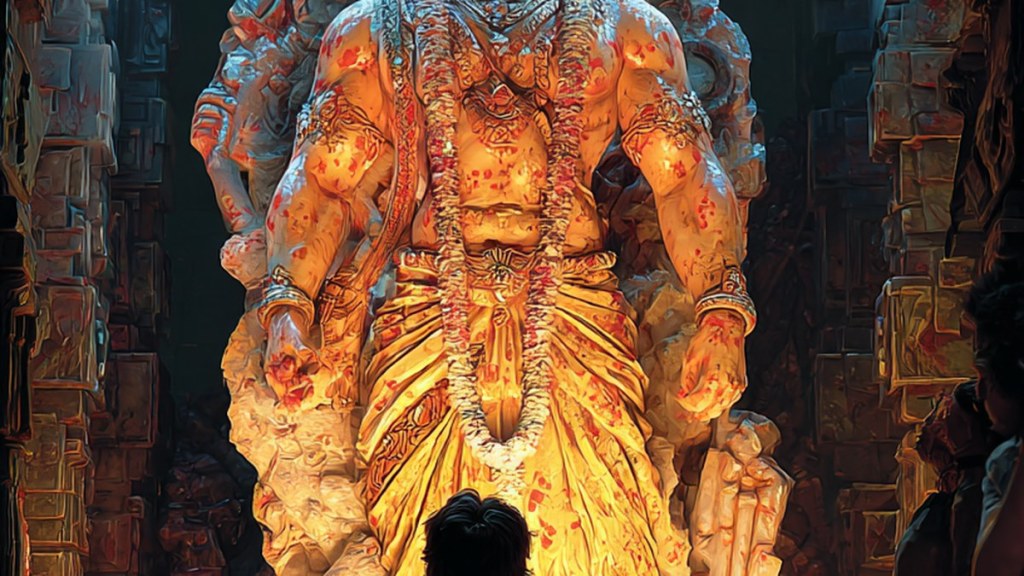
    The presiding deity of the temple is revered as Anjaneya, who is also known by the magnificent title, Vishvarupa Anjaneyar. This title speaks to his cosmic form, representing the universal manifestation of divine energy and boundless power. The statue of the presiding deity, standing at a majestic 12 ft height, is a focal point of immense reverence.

    “The presence of Anjaneya in Azhiyanilai is a tangible reminder that true strength lies not just in physical might, but in the moral fortitude to overcome adversity.”

    Architectural Harmony and Symbolism

    The architectural design of the temple reflects the spiritual philosophy it embodies. Unusually, the statue of the presiding deity is situated without a ceiling, an architectural choice that emphasizes the deity’s connection to the vast, open expanse of the heavens. The deity is oriented towards the east, symbolizing the rising sun of knowledge and new beginnings, perfectly aligning the temple with the dawn of spiritual enlightenment.

    Legends Woven in Stone: The Stories of Devotion

    The narratives surrounding Lord Hanuman are rich and profound, offering devotees endless inspiration. The legends associated with this temple speak to the transformative power of Hanuman’s actions—his dedication, his humility, and his unparalleled service to his devotees.

    Liberation from Suffering

    The core belief held by those who worship Anjaneya is that through devotion to him, all worldly sufferings are dissolved. Devotees believe that by invoking Hanuman’s energy, they gain the strength to navigate life’s inevitable hardships. This spiritual understanding transforms the temple from a mere structure into a powerful conduit for spiritual liberation.

    Visitor Tip: Spend time near the temple’s dhyana mandapa. This quiet space is designed for contemplation, offering a rare opportunity to connect with the stillness amidst the surrounding spiritual energy.

    Rhythms of Worship: Festivals and Rituals

    Festivals are the vibrant threads that weave the spiritual life of the temple. The rituals observed at Azhiyanilai are deeply rooted in tradition, providing a structured yet deeply personal experience for the devotees.

    The Significance of Saturday Pujas

    A particularly significant ritual observed at the Anjaneya Temple is the special pujas conducted every Saturday. These weekly observances are dedicated to honoring Lord Hanuman, reaffirming the bond between the deity and his worshippers. The atmosphere during these pujas is electric, filled with devotional songs and heartfelt prayers, marking a time for collective spiritual rejuvenation.

    The Ritual of Garlands

    A customary act of veneration involves adorning the deity with fresh Tulsi garlands. The fragrance of the Tulsi, a sacred plant in Hinduism, mingles with the temple air, creating an olfactory experience that is both soothing and spiritually uplifting. This simple act is a profound expression of love and respect offered by the devotees.

    A Practical Guide for Pilgrims

    For those planning a visit to this spiritually charged location, understanding the practicalities ensures a more enriching experience. We guide you on how to approach this sacred space with respect and mindfulness.

    Getting There and Temple Access

    Reaching Azhiyanilai requires planning, but the journey is part of the pilgrimage. Travelers should be prepared for the tranquil yet rural environment of the Pudukkottai district. Respect local customs and engage with the local community to deepen your connection to the place.

    • Best Time to Visit: The cooler months offer the most pleasant experience for exploration and contemplation.
    • Rituals: If you plan to observe the Saturday pujas, arrive early to participate in the communal devotion.
    • Attire: Dress modestly, reflecting the reverence due to a sacred Hindu site.

    Visitor Tip: Engage with the local priests and community members. Their knowledge of the temple’s ongoing rituals and local lore will provide you with an irreplaceable layer of understanding.

    Conclusion: Carrying the Strength of Hanuman Home

    The Anjaneya Temple at Azhiyanilai is a living monument to the enduring power of faith. It reminds us that amidst the complexities of modern life, the timeless virtues of courage, devotion, and selflessness remain the most potent forces. As you leave this sacred space, carry with you the strength of Lord Hanuman—the unwavering resolve to face your own battles with grace and courage. May the blessings of Anjaneya illuminate your path, just as they illuminate the walls of this ancient sanctuary.

    We invite you to explore related spiritual journeys. Read More about Hanuman Legends or discover Explore Other Temples in Tamil Nadu to continue your heritage exploration.

  • Amreshwar Dham: Discover Shiva’s Divine Presence in Jharkhand

    Amreshwar Dham: Discover Shiva’s Divine Presence in Jharkhand

    Amreshwar Dham: Discover Shiva’s Divine Presence in Jharkhand

    Journey with us to the heart of Jharkhand, where the spiritual currents of ancient India flow powerfully through the landscape. Nestled amidst the rolling hills and rich cultural blend of the region lies Amreshwar Dham, a sacred Hindu temple complex dedicated to the majestic Lord Shiva. Situated strategically near Khunti, this site is not merely a collection of stone and mortar; it is a living testament to centuries of devotion, a nexus where the divine energy of Shiva resonates deeply with the earth.

    Key Takeaway: Amreshwar Dham embodies the profound spiritual harmony of Jharkhand, serving as a vital pilgrimage point for devotees seeking the blessings of Shiva amidst the natural beauty of the region.

    As we explore the history and architecture of this revered site, we uncover layers of mythology, artistry, and community spirit that define the experience of visiting this holy place. From the ancient narratives whispered in the temple walls to the vibrant celebrations that mark the annual festivals, Amreshwar Dham invites every seeker to pause, reflect, and connect with the eternal essence of the divine.

    The Sacred Geography of Amreshwar Dham

    The location of Amreshwar Dham is intrinsically linked to the geography of Jharkhand. Positioned along the vital NH-20 corridor, the temple commands a commanding presence, accessible yet deeply embedded in the local landscape. This setting enhances the contemplative atmosphere, allowing visitors to experience the serenity that defines true spiritual pilgrimage.

    A Strategic Location for Pilgrims

    Amreshwar Dham is conveniently situated approximately 45 kilometers (28 miles) from Ranchi, the state capital, making it an accessible destination for devotees from across the state. Its proximity to the district headquarters ensures that it remains a focal point for local spiritual life while offering a unique escape for travelers seeking authentic regional heritage.

    Visitor Tip: When planning your visit, be prepared for a tranquil, rustic experience. The surrounding natural environment offers a perfect backdrop for meditation and reflection, especially during the cooler months.
    Did You Know? A region rich in spiritual history often finds its most profound temples situated not just by chance, but at points where natural, spiritual, and historical energies converge.

    A blend of History and Renaming

    The history of Amreshwar Dham is woven into the fabric of Jharkhand’s cultural narrative. While the temple has deep roots in local tradition, its formal recognition and elevation are marked by significant spiritual milestones. Understanding this history illuminates the depth of the faith that sustains this complex today.

    The Legacy of Renaming

    The temple’s formal identity was cemented through the spiritual influence of great sages. It was officially renamed as Amreshwar Dham by the revered Sage Shankaracharya Swami Swarupananda Saraswati. This renaming signifies the spiritual elevation and the acceptance of the temple’s place within the wider Hindu spiritual framework.

    “The history of Amreshwar Dham is a living chronicle, reflecting the enduring spiritual journey of the people of Jharkhand.”

    This renaming underscores the temple’s role not just as a local shrine, but as a significant waypoint in the larger spiritual geography of India.

    Patronage and Preservation

    The ongoing maintenance and preservation of the temple complex are entrusted to the Amreshvar Dham Prabandh Samiti. This organization acts as the custodians of the temple’s heritage, ensuring that the architectural integrity and spiritual sanctity of the site are maintained for future generations.

    Architectural Marvels and Sacred Spaces

    The architecture of Amreshwar Dham, while rooted in regional styles, speaks volumes about the devotion and skill of the artisans who brought this vision to life. The structure is designed not just as a place of worship, but as a physical manifestation of cosmic order.

    The Sanctity of the Temple Structure

    The physical structure of the temple complex is characterized by a blend of traditional Hindu architectural principles adapted to the local environment. Each stone, each carved pillar, and each meticulously placed element contributes to an atmosphere of profound stillness. The design invites the visitor into a sacred space where the mundane world dissolves into the realm of the divine.

    The scale of the complex reflects the importance of the deity and the community that supports it. It is an architectural narrative written in stone, telling stories of devotion, endurance, and divine grace.

    Harmonizing Art and Spirituality

    The interplay between the physical structure and the spiritual intent is masterful. The layout of the temple grounds is designed to facilitate a spiritual journey, guiding the devotee through spaces intended for worship, contemplation, and communal gathering. The craftsmanship observed in the details is a subtle reminder that divinity resides in every aspect of creation.

    45 km separation from Ranchi, placing it within easy reach of Jharkhand’s spiritual heartland.

    The Divine Pantheon: Deities Beyond Shiva

    While Amreshwar Dham is fundamentally dedicated to Lord Shiva, the complex serves as a unique spiritual confluence, housing shrines to other beloved Hindu deities. This syncretism reflects the inclusive nature of Hinduism and the universal appeal of divine love.

    A Sanctuary for Multiple Deities

    Beyond the primary focus on Shiva, the temple complex is also a repository for the worship of other significant figures. Devotees find solace and connection in the presence of Ganesha, the remover of obstacles; Rama and Sita, embodying divine partnership; and Hanuman, the epitome of selfless devotion and strength. This multi-deity setting offers a holistic spiritual experience for all who enter.

    “In the embrace of Amreshwar Dham, the worship of Shiva is enriched by the presence of all divine forms, creating a space of unparalleled spiritual inclusivity.”

    Festivals: The Vibrant Pulse of Devotion

    The spiritual life of Amreshwar Dham is most vibrantly experienced during specific festivals, when the devotion of the community swells into a collective, ecstatic expression. These annual celebrations transform the temple into a hub of communal joy and spiritual energy.

    The Sawan Season Celebration

    The month of Sawan (monsoon season) is perhaps the most anticipated time for devotees visiting Amreshwar Dham. During this period, the atmosphere is charged with an intense spiritual energy. The monsoon rains, which nourish the land, are also seen as blessings that cleanse the soul and deepen the connection with the divine. Large crowds gather, seeking blessings and participating in rituals that honor the cycle of life and renewal.

    Maha Shivaratri: The Night of Divine Union

    The pinnacle of the temple’s annual celebrations is undoubtedly Maha Shivaratri. This night is a powerful convergence of devotion, fasting, and ecstatic worship dedicated to Lord Shiva. The atmosphere during Maha Shivaratri is electric; the temple buzzes with devotional songs, aarti, and profound spiritual fervor. It is a night where the veil between the earthly and the divine feels thinnest, offering an unparalleled opportunity for deep spiritual immersion.

    Key Takeaway: The festivals at Amreshwar Dham, especially Sawan and Maha Shivaratri, are not just religious events but vibrant cultural celebrations that weave the community into a shared spiritual experience.

    A Practical Guide for the Pilgrim

    For those planning a pilgrimage to Amreshwar Dham, understanding the logistics ensures that the spiritual journey is as smooth and rewarding as the experience itself. Practical knowledge enhances the reverence of the visit.

    Getting There and Local Context

    Reaching Amreshwar Dham is straightforward, being located along the NH-20 route. Travelers should factor in the local context of Jharkhand, an area known for its rich tribal heritage and deep-rooted spiritual traditions. Being mindful of local customs will only deepen the connection you forge with the community.

    What to Expect During Your Visit

    • Atmosphere: Expect a deeply spiritual and tranquil environment, especially outside the peak festival times.
    • Rituals: Observe the local customs and rituals with respect; seek guidance from local priests or temple authorities.
    • Accommodation: Local accommodation options are available near Khunti, allowing for an immersive stay within the region.
    • Interaction: Engage respectfully with the local community; they are the living custodians of this heritage.

    Connecting with the Heritage

    Beyond the temple walls, the surrounding region offers a rich context. Exploring the nearby areas allows one to appreciate how the spiritual life of Amreshwar Dham is integrated into the broader cultural landscape of Jharkhand. Consider exploring nearby historical sites for a more complete understanding of the region’s heritage.

    Conclusion: An Enduring Spiritual Anchor

    Amreshwar Dham stands as a powerful spiritual anchor in Jharkhand. It is a place where the majesty of Lord Shiva is felt not just through grand architecture, but through the living devotion of its people. Whether you are a seasoned pilgrim seeking profound meditation or a traveler discovering the wonders of India’s diverse spiritual geography, Amreshwar Dham offers an experience of authentic, warm, and unforgettable heritage.

    “Amreshwar Dham is more than a destination; it is an invitation to experience the eternal rhythm of the divine woven into the very soul of Jharkhand.”

    We invite you to seek this sacred space, to witness the enduring faith, and to carry the peace found at Amreshwar Dham back with you.

    If you are interested in exploring other sacred sites in the region, we highly recommend reading about the temples in Jharkhand. Explore Other Jharkhand Temples awaits your journey.

  • Angalamman Temple: Ancient Stone Marvel in Kaveripakkam

    Angalamman Temple: Ancient Stone Marvel in Kaveripakkam

    Angalamman Temple: An Echo of Pallava and Chola Glory in Kaveripakkam

    Journey with us to the verdant landscapes of Tamil Nadu, where history is not merely written in books but carved into the very stone. Nestled in the historic town of Kaveripakkam, lies the Angalamman Temple, a profound testament to the enduring spiritual and architectural legacy of South India. This is more than just a place of worship; it is a tangible link to the dawn of stone architecture in Tamil Nadu, whispering tales of the Pallava and early Medieval Chola periods.

    Key Takeaway: This temple stands as one of the earliest stone structures in Tamil Nadu, offering a rare glimpse into the evolving artistic and religious landscape of ancient South India.

    As we explore the intricate carvings and the serene atmosphere of Kaveripakkam, we uncover a narrative woven from divine worship, royal patronage, and unparalleled craftsmanship. The Angalamman Temple invites the traveler not just to observe architecture, but to feel the deep, resonant spirituality that permeates the soil of this sacred land.

    The Deep Roots: History and Antiquity

    To truly appreciate the Angalamman Temple, one must first understand its temporal context. Situated in the Vellore district, Kaveripakkam is a place steeped in millennia of cultural evolution. The temple’s foundations are deeply intertwined with the powerful dynasties that shaped the subcontinent.

    Pallava and Chola Influence

    The historical markers associated with this site place it firmly within a pivotal era. The temple’s remains testify to the influence of the Pallava dynasty, whose artistic and religious patronage laid the groundwork for subsequent temple construction in the region. Furthermore, its association with the early Medieval Chola period reveals a continuous thread of religious devotion that binds this site to the grand narrative of South Indian history.

    Did You Know? The presence of stone structures like this in this region speaks volumes about the sophisticated engineering and religious fervor present during the Pallava and Chola eras, demonstrating a high level of artistic and architectural achievement long before the medieval period.

    A Chronicle in Stone

    Studying the temple walls allows us to read an ancient chronicle. Each block of stone carries the memory of artisans, priests, and kings who dedicated their resources to this sacred endeavor. It is a physical manuscript detailing the transition of religious practices and artistic styles across centuries.

    “The stones of Kaveripakkam do not merely stand; they sing the epic saga of Tamil history, echoing the grandeur of the Pallavas and the devotion of the Cholas.”

    Architectural Marvels: Blending Deities

    The architectural style of the Angalamman Temple is a fascinating study in syncretism—the harmonious blending of different religious and sculptural traditions. While the primary dedication is to Angalamman, the structure itself reflects the broader artistic currents of the time.

    The Prominence of Shiva

    A striking feature of this temple complex is the prominence given to the idol of Shiva. In the context of the period, the manifestation of Shiva often served as a focal point, symbolizing cosmic power and divine order. The idol of Shiva here is particularly characteristic, seated in the revered utkutikasana posture, holding the leaves of the Vedas in his hands. This posture immediately establishes the temple within a classical Hindu iconographic tradition.

    The divine presence of Shiva in utkutikasana at the temple.

    Stone Craftsmanship of the Era

    The construction techniques employed at Kaveripakkam reveal the skill of the ancient masons. The use of local stone, expertly shaped and assembled, speaks to an advanced understanding of structural integrity and aesthetic design. Observing the detailed carvings, one can trace the evolution of sculptural art in Tamil Nadu, noting the transition from earlier styles to the more defined forms of the medieval period.

    Visitor Tip: Take your time to examine the stonework. Notice how the architectural lines flow smooth, illustrating the regional architectural vocabulary. The interplay between the primary deity and the prominent presence of Shiva offers a rich visual lesson in Hindu theological synthesis.

    The Divine Presence: Angalamman and Legend

    At the heart of the temple lies the worship of Angalamman. Understanding the significance of this deity is key to unlocking the spiritual depth of the site. Angalamman is revered across the region, embodying specific regional spiritual currents and local folklore that enrich the temple’s narrative.

    The Significance of Angalamman

    Angalamman is not just a name; it represents a specific divine energy worshipped by the local populace. The legends surrounding the temple often weave stories of divine intervention, local heroes, and the establishment of sacred boundaries. These legends are the living soul of the temple, connecting the ancient stone to the contemporary worshipper.

    The serene interior of the Angalamman shrine.

    Syncretism in Worship

    The temple beautifully exemplifies the syncretic nature of South Indian religious life. The simultaneous reverence for Angalamman alongside the prominence of Shiva reflects the inclusive nature of Hindu philosophy, where various forms of the divine coexist and are honored within a single sacred space. This blending is characteristic of the spiritual environment fostered by the Pallava and Chola eras.

    Festivals and Community Life

    Temple life is intrinsically linked to the rhythm of the community, marked by vibrant festivals that draw people from across the region. While specific annual festival dates are subject to local calendar variations, the temple is a focal point for community celebrations that celebrate the life cycle of the divine and the prosperity of the land.

    Celebrating the Divine Rhythm

    Festivals at the Angalamman Temple are vibrant expressions of community life. These celebrations are opportunities for the local community to reaffirm their shared history, honor their ancestors, and engage in communal worship. They serve as vital anchors, connecting the ancient spiritual practices with the living traditions of the present day.

    100% of the temple’s annual calendar is dedicated to celebrating the cycle of divine worship and community cohesion.

    A Guide for the Spiritual Traveler

    For those planning a visit to this remarkable site, practical guidance ensures the experience is both enriching and respectful. Navigating the history and architecture requires a mindful approach.

    Getting There and Practicalities

    Reaching the Angalamman Temple in Kaveripakkam requires careful planning. As a site deeply rooted in the history of Tamil Nadu, understanding the local geography is essential for a smooth pilgrimage.

    • Best Time to Visit: The cooler months, avoiding the intense heat of summer, offer the most serene experience for exploring the temple grounds.
    • Atmosphere: Seek a quiet morning visit to absorb the historical weight and the subtle spiritual ambiance.
    • Respectful Conduct: Always observe local customs. Dress modestly and maintain a posture of reverence, acknowledging the deep history held within these ancient walls.

    What to Expect on Site

    Visitors should anticipate an experience rich in texture—the feel of the ancient stone, the resonance of the sacred space, and the quiet contemplation offered by centuries of unbroken tradition. Engage with the local custodians to hear the living stories behind the carvings.

    Conclusion: Enduring Legacy

    The Angalamman Temple in Kaveripakkam is a poignant reminder that history is not a static concept but a living, breathing entity embedded in the landscape. It stands as a magnificent monument to the Pallava and Chola eras, a testament to artistic genius, and a vibrant center for enduring devotion. As travelers explore the rich blend of India, sites like this invite us to slow down, reflect, and connect with the profound spiritual heritage that shapes the soul of the land.

    We encourage you to explore into the world of South Indian heritage. Discover more about the architectural brilliance of the region by reading our feature on Pallava Architecture or explore related spiritual sites like the Angalaamman temple.